September 03, 2006

SIMON GETS A BIRD IN THE DALES

The meaning of this title should steadily become clear, but it involves a Sunny September Sunday visit to Bedale in North Yorkshire.


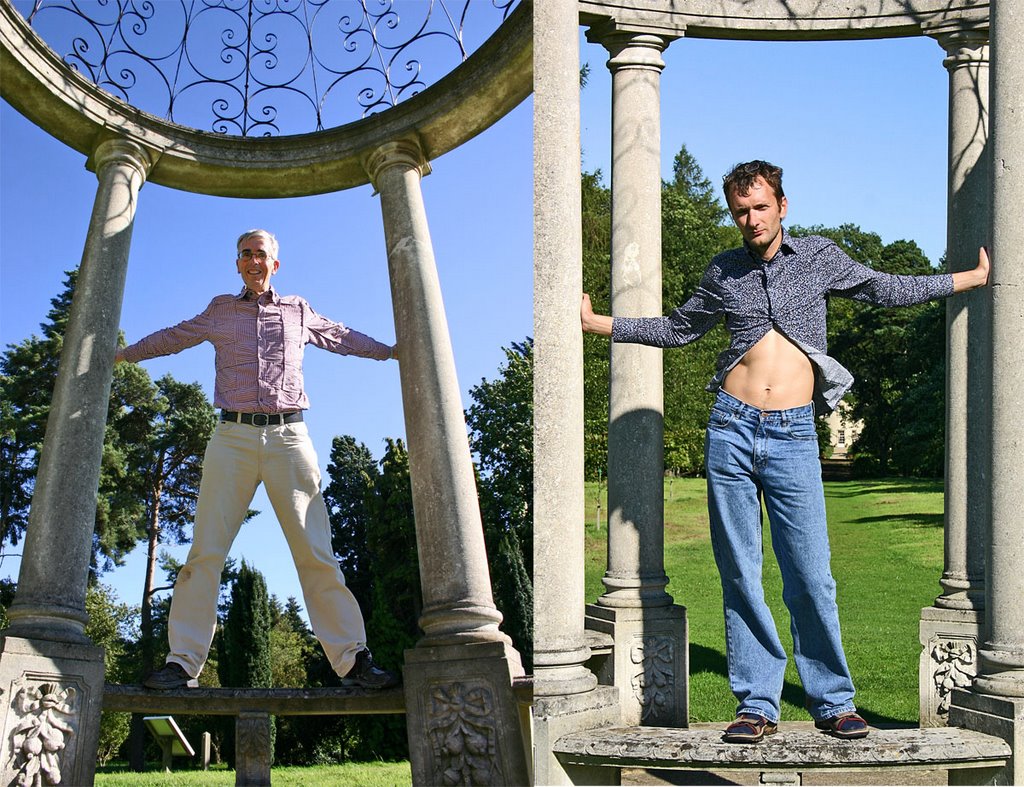
The house you can see is called "Thorp Perrow" and has a fine garden and Arboretum within its extensive grounds. Very pleasant to walk around and to explore, and we enjoyed the Gazebo (below)
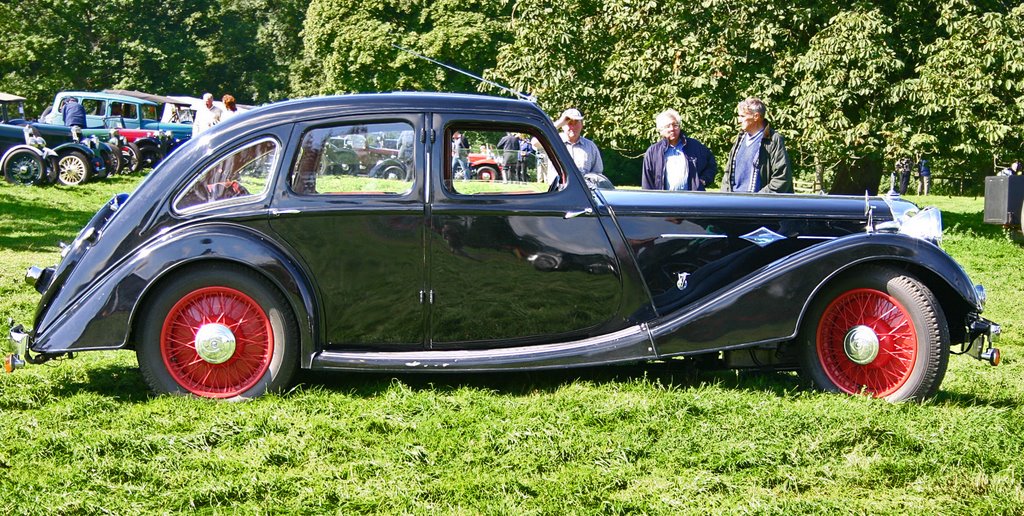
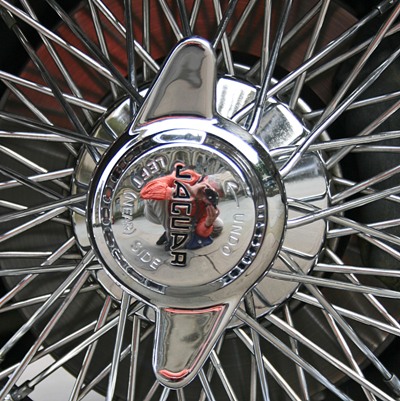
However, the "Bird" used in my title refers to a Bird of Prey and you will see below a partial answer. This is a 1938 Riley Kestrel which we saw at Thorp Perrow. This Kestrel was one of about 200 Classic Cars which Juris and I went to see - these will appear on my online photo albums soon (see below)


Ah now it becomes clear, or Cleo !!

This 'bird' is indeed a lady; named "Cleo" she is an Eagle Owl from the Afghanistan region and I got to hold her for a few miunutes. Juris also got to hold her later.


The whole visit, the gardens, house, trees, birds and cars made a very pleasant Sunday outing.


British Cars 1940-1980Car Heads and TailsBritish Cars - Sides

August 14, 2006

DUTCH DOUBLE: Doing Dam City

On the Glorious Twelfth, Juris and Simon landed in Amsterdam for a quick weekend visit.


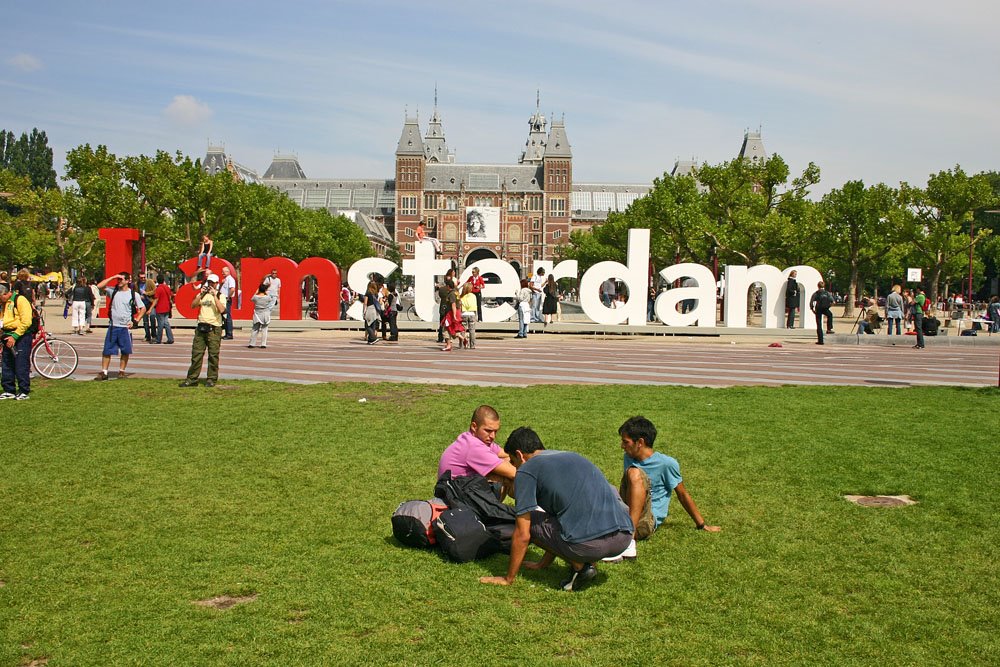
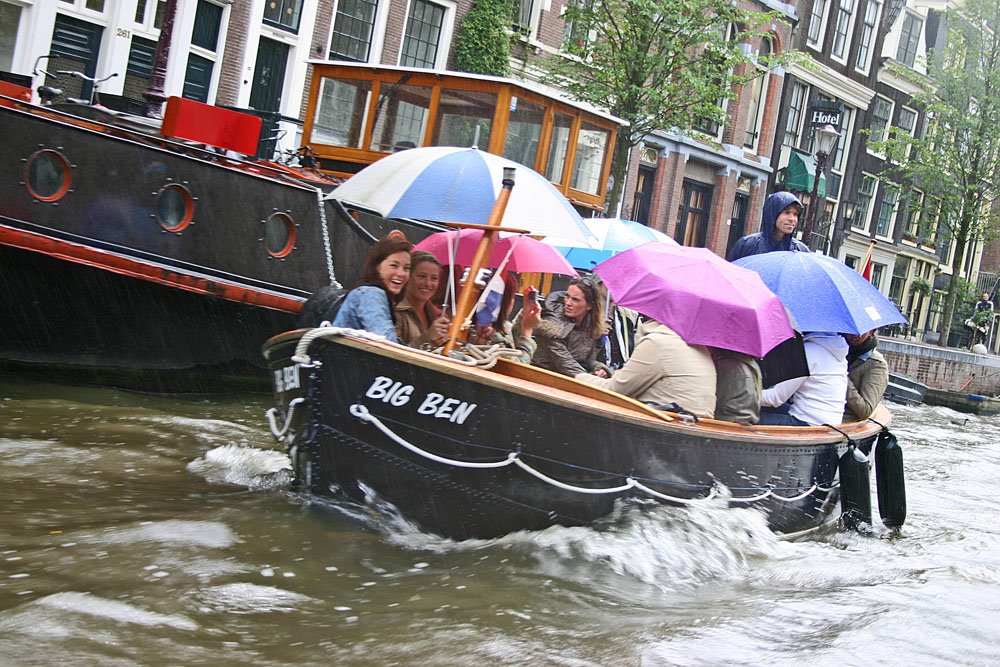
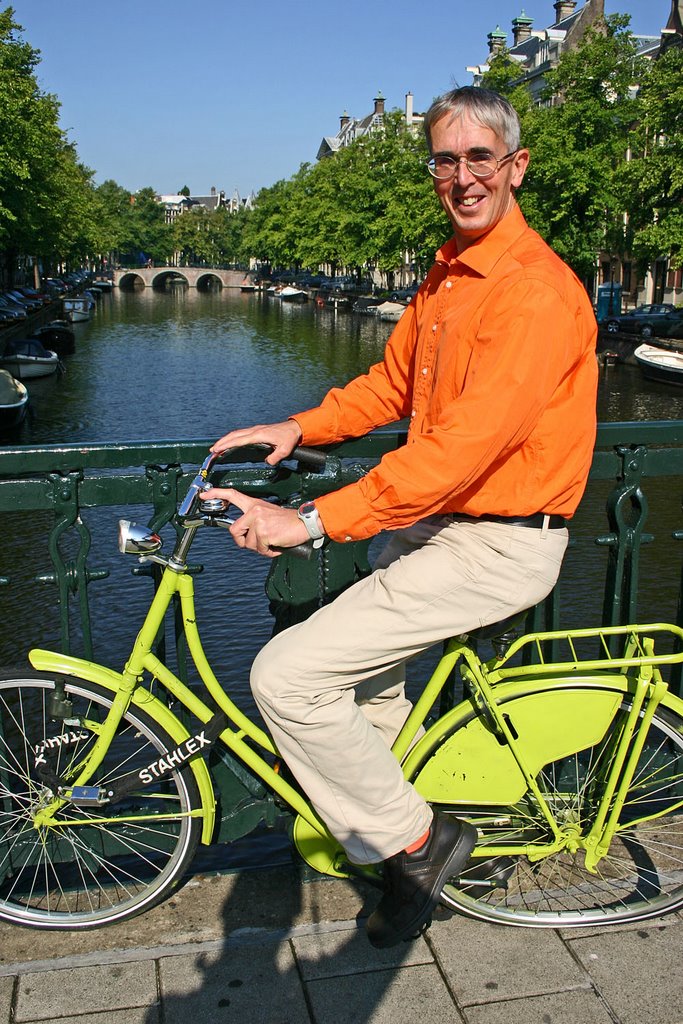
Saturday was almost rained out, but Sunday was a much better day. You see here some views to capture the Canal experience (and the rain on Saturday).


On Sunday the Sun returned and treated us to some glorious views.


We were also treated to glorious views in the Rijks Museum where Rembrandt's finest were on display, including of course the Night Watch.

Even more moving for me were the late Van Gogh works in the Van Gogh musuem. I was very moved by these extraordinary works, seeming to me to have been painted almost in a frenzy - as though his coming death was almost apparent to the artist.


At night the glorious views of Amsterdam are altogether different. This shop sign shows that 'Magic Mushrooms' may be purchased here. There are also countless "Coffee Shops" where Cannabis is dispensed for on or off premises use, and you can sit in the window with one of those cooled pipes to enjoy it.

And of course there is the Red Light District where consumption quite definitely ON the premises is available and the "smokin" depends on your own prowess. I tried NEITHER of these premises myself !

A much bigger Album is available online ... click below

Amsterdam
Aug 14, 2006 - 50 Photos

May 04, 2006

WE KAME TO KAUNAS

Kaunas is the third of the Capitals of Lithuania (coming after Trakai and before Vilnius).


We visited both of the others, but our evening and morning in Kaunas impressed me more.

To start our explore of Kaunas we climbed to the top of the hill to the Upper Town. Not a very rewarding trek this except for the chance to view and to inspect the extraordinary white CHRIST'S RESURECTION CHURCH

I don't have pictures of this church (click the link to see some photos), but I will long remember the experience joining in the lighting of candles here at the Easter Saturday service. Click the link also to learn about the extraordinary on - off - on construction of this church and about how the 'Resurrection' is also the rebirth of Lithuania as a country.


On Easter Sunday morning, we wandered around the delightful old town of Kaunas, busy with Easter worshippers milling around the many churches and the stalls of the Easter market bathed in seasonal sunshine (see link).

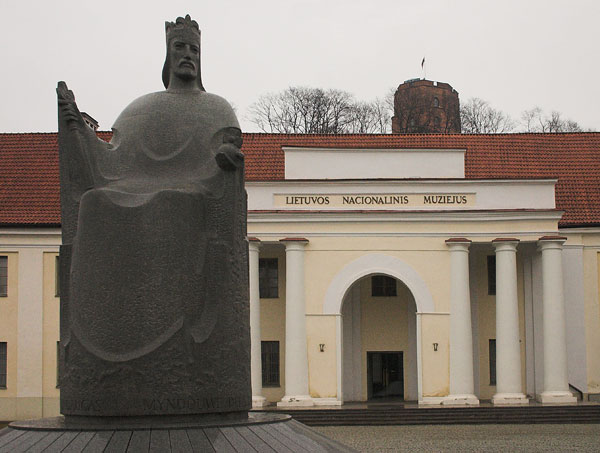
The history of Lithuania is quite interesting, because it has often been controlled by foriegn invaders. Teutonic Knights, Russians and Polish interests (see link). Lithuanians have a tradition of resistance to such control, and this is shown in the three photographs below.


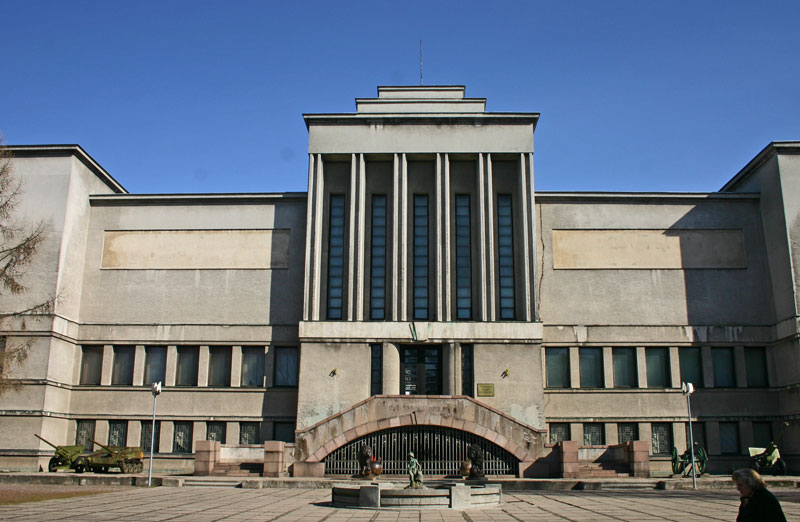
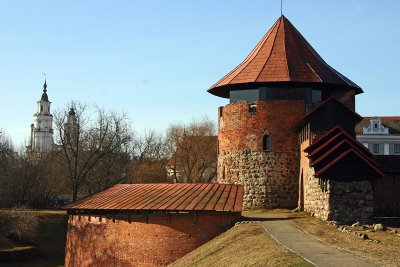
The picture above shows the Military Museum. This was built as a Museum, but during the years of Russian control (1944-1989) it was emptied of all its exhibits and used as a warehouse. It has only been restored in the last few years.


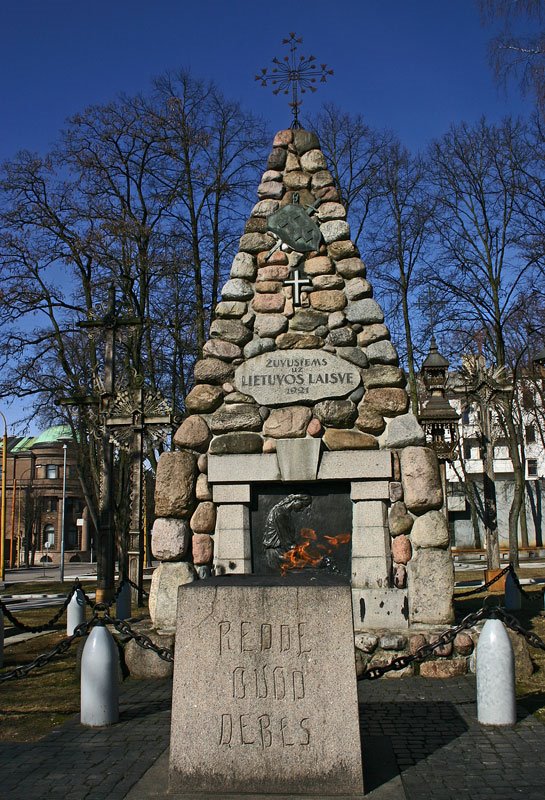
The monument above was erected in memory of those who died for the liberation of Lithuania in 1919 and before. It may not be a surprise to learn that the Russians destroyed this monument along with many other statues and commerative items. All has been rebuilt in the last few years and the eternal flame (just visible) burns again.

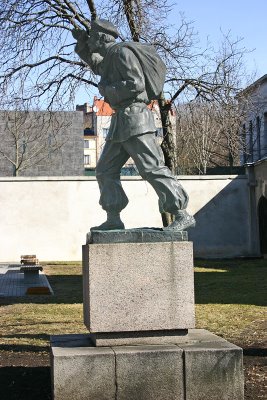
The final photo shows the Book Carrier. Under the long years of Russian control, Lithuanian culture and learning was suppressed - or at least forced underground. But Lithuanian texts continued to be published and they were famously carried around the countryside by figures such as depicted on this statue. This man distributed Lithuanian texts around his country and thus carried Lithuanian culture into the future.
May 02, 2006

LENT ENDS IN LATVIA, LITHUANIA AND LENINGRAD


Easter week in Latvia.
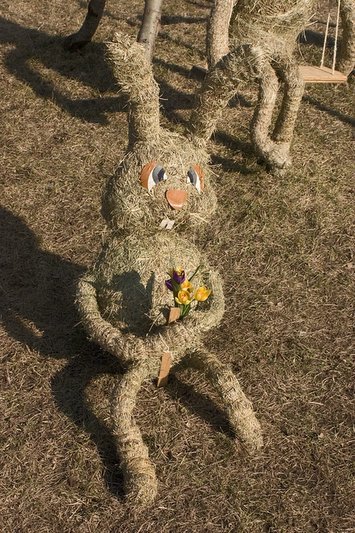
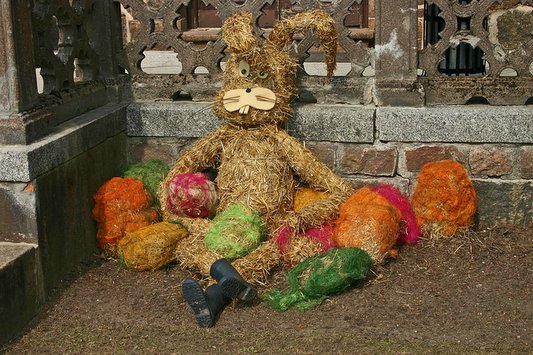
Many such straw figures as this rabbit could be found in public places. This one is in a central park in Riga.


And here in the same Riga Park an Easter nest with two Cranes (or maybe Herons) standing in the distance.

This jolly rabbit was found in the Latvian town of Sigulda.


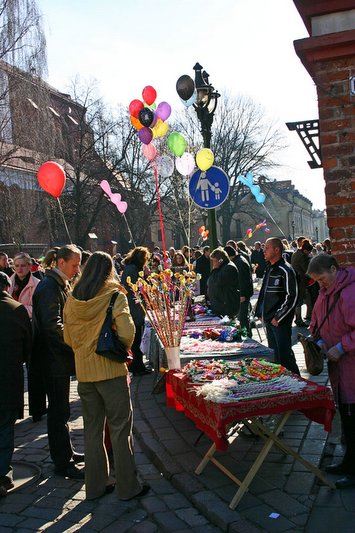
Here is a market in the square of the old town of Kaunas (Lithuania) on Easter Sunday morning.


Posted by Picasa


Juris and I attended a delightful Easter Saturday service in the modern (1930s) chuch in the Upper town of Kaunas where the lighting of candles was made. One week later we attended a similar service for Orthodox Easter at the Vladimir Church in St Petersburg.

Numerous other Easter services were 'popped into' during our Double Easter visit.

April 29, 2006

RUSSIANS HAD A CROSS TO BEAR


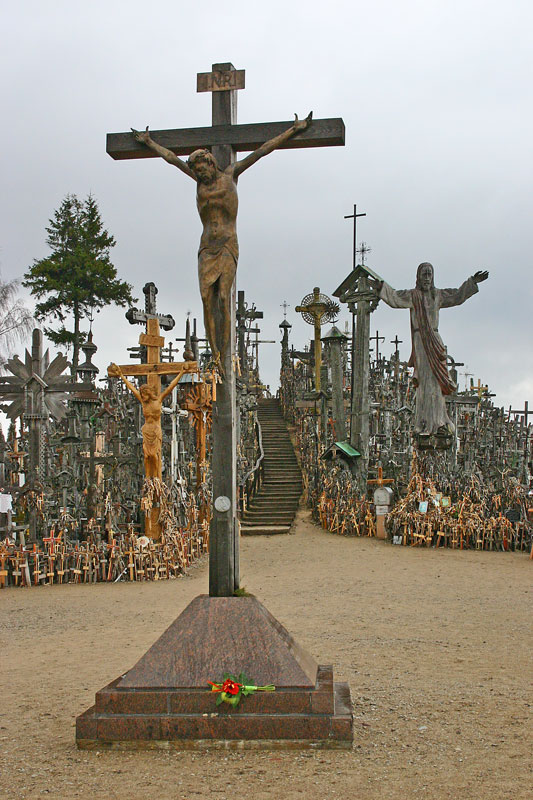
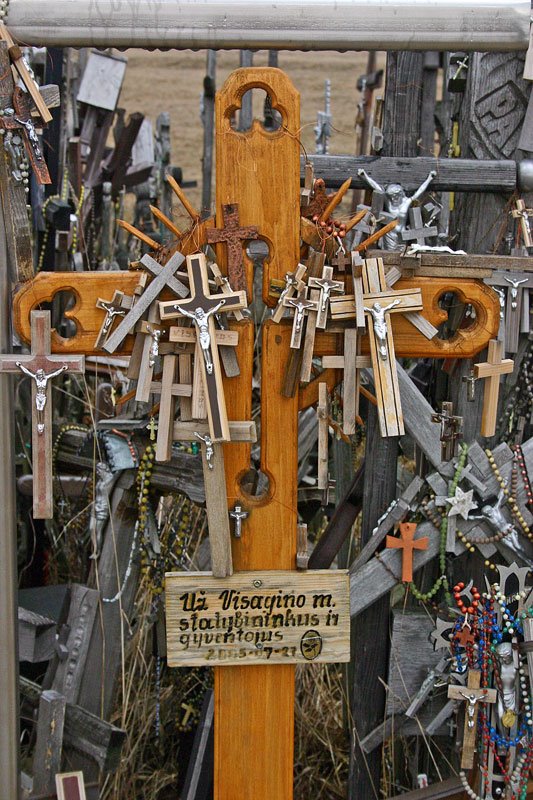
The town of Siauliai was founded about 1230, and in the following century was occupied by Teutonic knights. Lithuanians started showing their resistance to these occupiers by planting crucifixes on this hill at Kryži Kalnas just outside the town and a tradition was started.


Later invaded by Russia and then divided up under a Poland partition the Hill of Crosses became an enduring place for Lithuanians to show their faith and their resistance.


From 1944 to 1991 Lituania was officially part of the USSR and local objections to such 'management' manifested themselves in the placing of more and more crucifixes at this site.

For 40years the Soviets tried to stop this practice. They broke stone crosses, burnt wooden ones, and melted down metal ones. But they could not break, burn or melt the people.

I am told by a local resident that people who removed crucifixes often died within a few months - almost as though their actions cursed them.


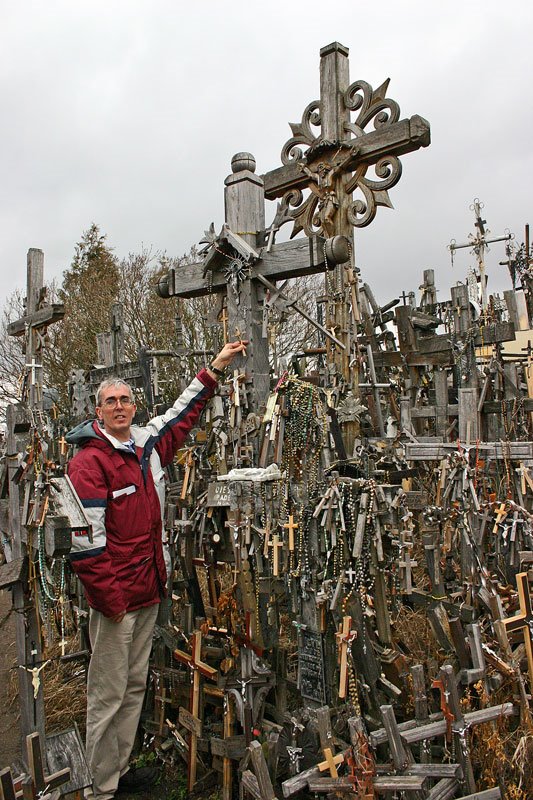
Today the hill has become filled with crucifixes, and several places around have had to be colonised with crucifixes. Every visitor can buy a crucifix and afix it to another to add to the millions that already stand against religious oppression.


Lithuanians also have a distinctive design of crucifix which often has a little figure below the cross beams who stands on each of the four sides of the cross - he is looking out for and keeping the owner of the cross safe from bad times.

April 28, 2006

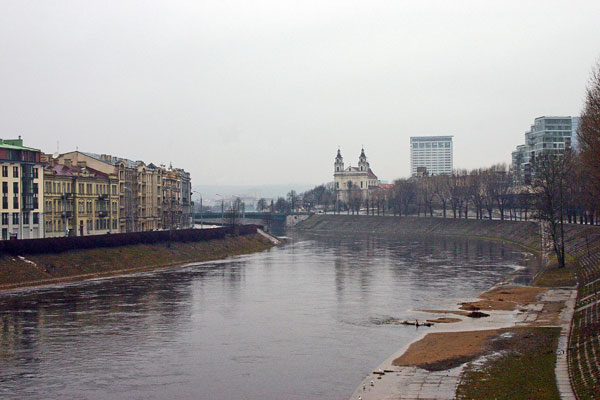
VILNIUS VIEWED


I was a bit disappointed in Vilnius itself because it was undergoing a massive poshing-up programme with the aid of EU funding.

Around the outskirts of the Old City were several brand new 30storey glass towers of the kind you will see in Hong Kong, Bahrain, Shanghai etc - not very 'Baltic'


Parts of the Old City were quite pretty, but many of these were being 'renovated' which involved blowing up the middle of the buildings and just keeping the external walls on the outside of new structures. The original buildings had contained dwellings for ordinary people, or little family-run shops and businesses, the newly renovated contain offices for foreign companies, hotel space for foreign businessmen, or outlets for Gucci, Armani, Chanel. Nothing very Baltic here.


Juris wanted to visit a Russian period Power station on the banks of the river, and we found this but it was closed and being renovated.


Better, in my view, was the older capital of Lithuania, Kaunas. Lots of interest here, a lovely Old Town, a fabulous 1930s Cathedral and not much sign of EU poshing up. Also visited the even older capital of Trakai - a castle on a lake. We didnt have time to visit the Bronze Age capital.

Yes Lithuania is worth a visit - especially before the EU funds get spread too thickly.

April 26, 2006

OPEN HISTORY


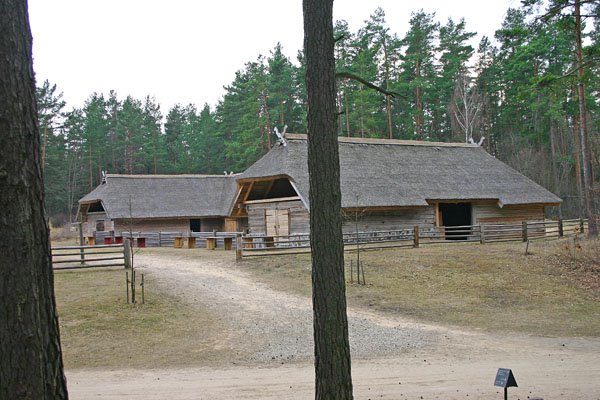
In a forest just to east of the city limits of Riga, exists the Latvian Ethnic Open Air Museum. Take the A2 (E77) road ot of town and if you get to the crossroads of the E67 and A4 then you have gone too far, but dont worry, turn south on the A4 and after a little while turn west to double back towards Riga and on that road you should find ETHOGRAFISKAIS BRIVDABAS MUZEJS.


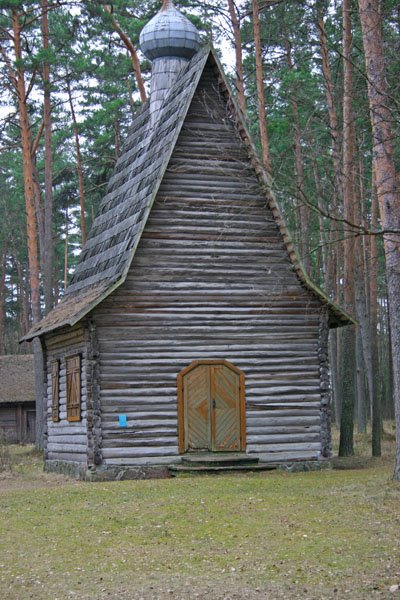
Laid out amongst the trees are about 50 wooden buildings that have been disassembled and then rebuilt here as examples of the heritage of Latvia. There are four regions to Latvia (Latgale, Zemgale, Kurzeme, the Liv land and Selija) and each had its own traditions and buildings styles, these are all represented here.

Over the last 50 years or so, real structures have been found across Latvia and removed to Brivdabas. Many of these buildings are about 200years old and were still in use until about 50years ago before being taken apart and moved to this Museum.

It is very pleasant to amble about through the trees and discover the many wooden structures full of character, tradition and history.


There are dwelling houses, farm buildings, windmills, barns, and churches. Our visit was in the evening (the park is open until dusk) so we could not enter any of the buildings, but in the main opening hours you will be able to inside. Demonstrations of Latvian crafts and of milling etc are given to visitors during the main opening periods.


Some catering is provided on site, and we enjoyed a good beer in a bar located within a large farmstead building, whilst a birthday party merrily tucked into a medieval style feast at long tables in an adjacent room.

April 25, 2006

A FINE PICTURE


Not a particularly stunning photo, I admit but it did get me into trouble.


Yes an official came across to me very upset about me taking this picture, and was threatening to confiscate the camera and all sorts.

In the end he fined me 100rubbles (about 2quid).

I am pleased to have contributed in such a major way to the security of the Russian state - how would you manage without such benefactors as me ???


April 24, 2006

KAMMER WITHOUT CAMERA


Friday was grey and showery - not really a day for photography. We visited the KunstKammer (Arts Tower) where Peter the Great decided to collect a few things - such as thousands of examples of oriental culture from Eskimo aretefacts to tribal pieces from South America, Burma, the Indian sub-continent etc.

He also took a keen interest in the science of autopsy and collected many specimens of deformed foetuses such as cyclops babies, 2-headed foetus and other rather gruesome 'monsters'. These are pickled and on display in picling jars. A bit too queezy for me, but Juris is doing biology so he enjoyed it.

Afterwards we went to the Russia Museum which houses a fantastic exhibition of Russian Art from all periods (The Hermitage only holds non-Russian art). There was a temporary display of Icons of St Nicholas - quite fantastic.

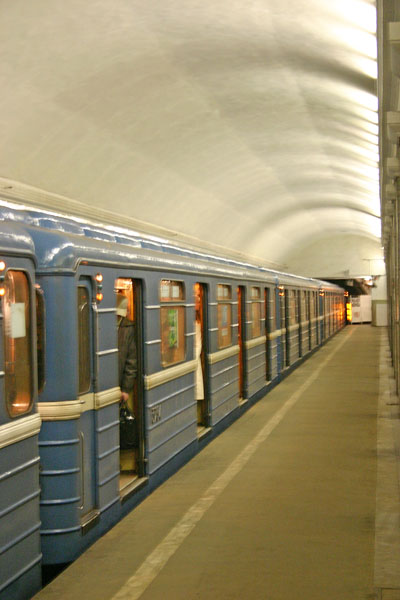
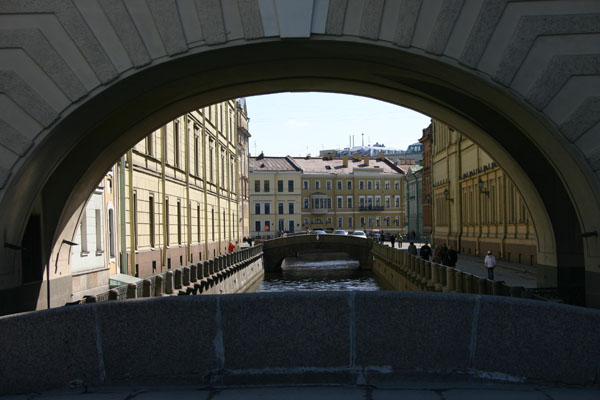
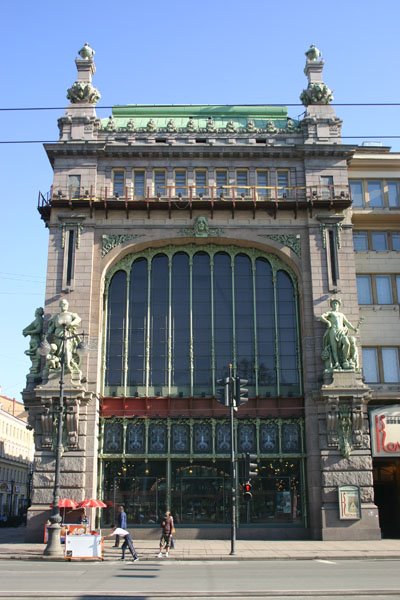
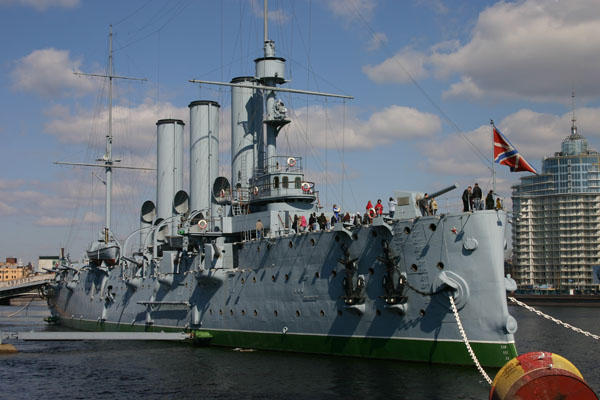
The pictures are general views of SPB. The boat is the "Aurora", a shot fired on this ship started the 1917 Revolution and the first Communist state was established.